
How to Choose Healthy Ready-to-Eat Food: A Simple Guide to Food Labels
Ready-to-eat food can make busy days much easier. You can enjoy a quick snack, put together a meal, or satisfy a craving without spending a lot of time cooking.
But with so many packaged food options available, one question often comes up:
How do you know if a ready-to-eat food is a good choice?
The answer starts with something many people ignore — the food label.
You don't need to be a nutrition expert to understand a food label. A few simple checks can tell you what is in the product, how much you are eating, how it should be stored and whether it fits your preferences.
This guide explains how to choose healthy ready-to-eat food, what to look for on a food label and what you should know before buying packaged snacks.
What Is Ready-to-Eat Food?
Ready-to-eat food is food that requires little or no preparation before consumption, depending on the product instructions.
Some products can be eaten directly, while others may require simple assembly or heating.
Examples include:
-
Ready-to-eat meals
-
Packaged Indian snacks
-
Chaat and snack kits
-
Pani puri kits
-
Sandwiches and wraps
-
Packaged salads
-
Prepared rice or meal dishes
-
Other convenient food products
The main benefit is convenience.
Instead of spending a long time preparing every ingredient, you can enjoy the food with fewer steps.
However, convenience should not mean ignoring the ingredients.
That's where the food label becomes important.
Is Ready-to-Eat Food Healthy?
Ready-to-eat food is not automatically healthy or unhealthy.
It depends on the individual product and its ingredients.
Two ready-to-eat foods can look similar on the outside but have very different nutritional profiles.
When choosing a product, look at:
-
Ingredients
-
Serving size
-
Calories
-
Protein
-
Fibre
-
Total fat
-
Saturated fat
-
Sugar
-
Sodium or salt
-
Storage instructions
-
Expiry or best-before information
The important thing is to look at the whole picture, rather than judging a food only because it is packaged.
How to Read a Ready-to-Eat Food Label
Food labels can look complicated at first, but you can simplify the process.
Here are the main things to check.
1. Start With the Ingredient List
The ingredient list tells you what the product is made from.
This is one of the most useful sections of a food package.
Look at:
-
The main ingredients
-
Added sugars
-
Oils and fats
-
Salt
-
Flavouring agents
-
Preservatives, if used
-
Allergens or ingredients you need to avoid
If you have specific dietary preferences or restrictions, the ingredient list becomes particularly important.
A simple rule:
Don't buy based only on the front of the packet. Check the back too.
The front may tell you what the product wants you to notice.
The ingredient list tells you what is actually in it.
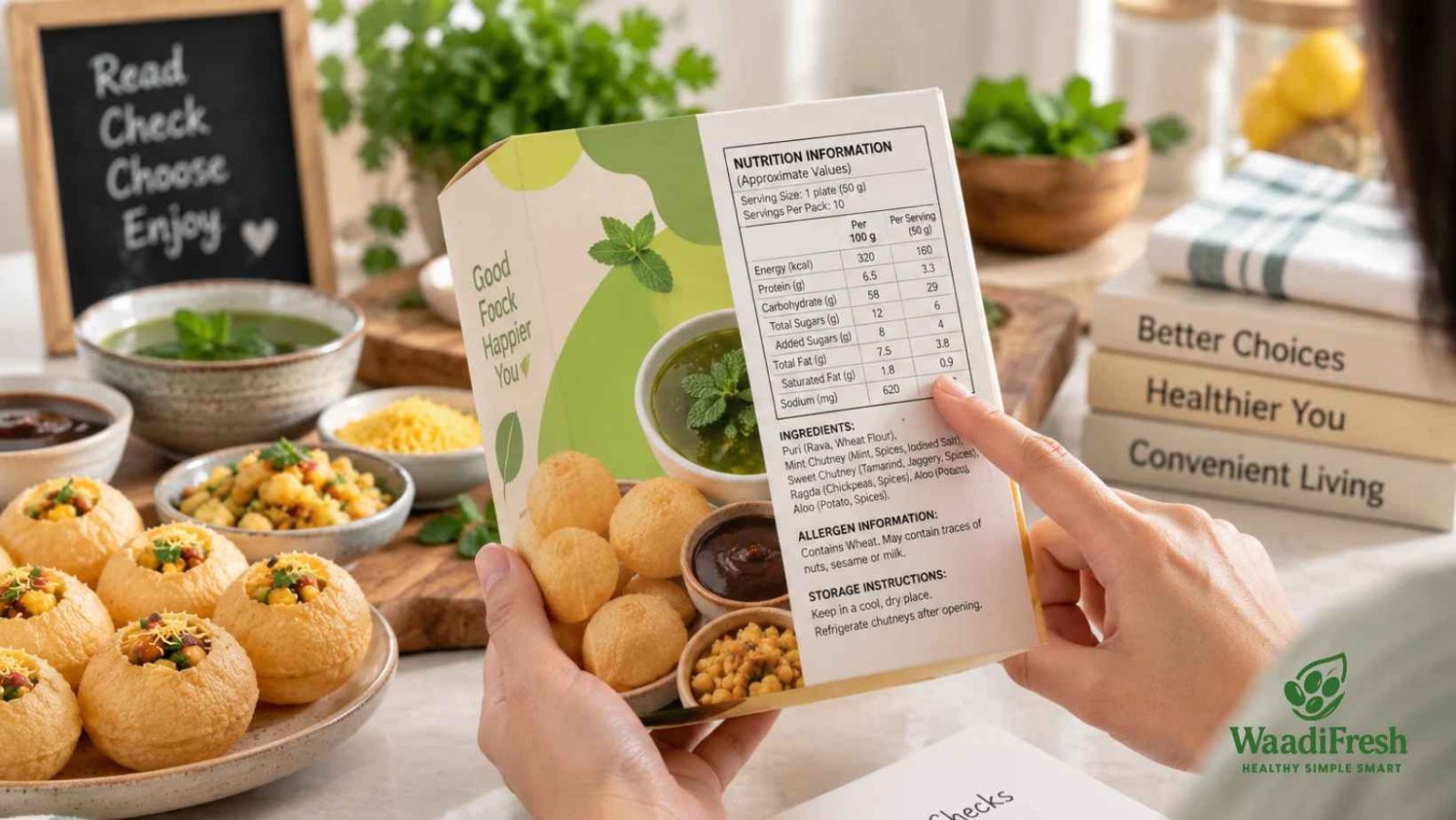
2. Check the Nutrition Information
The nutrition panel can help you understand the nutritional value of the food.
Depending on the product, you may see information about:
-
Energy
-
Protein
-
Carbohydrates
-
Total sugars
-
Fat
-
Saturated fat
-
Sodium
-
Fibre
-
Other nutrients
Don't focus on just one number.
For example, a product being low in fat doesn't automatically make it a healthy choice if it is high in sugar or sodium.
Look at the overall nutritional profile.
3. Pay Attention to Serving Size
This is an important point that many people miss.
The nutrition information may be provided per serving, while the entire package may contain more than one serving.
For example, if a package contains two servings and you eat the entire package, you need to account for both servings.
So before comparing two products, make sure you are comparing similar serving sizes.
Remember:
One packet does not always mean one serving.
4. Check the Sugar Content
Sugar can appear in many forms in packaged foods.
When checking a label, look at the total sugar information and ingredient list.
For snacks, sauces, beverages and desserts, this can be particularly useful.
If you are trying to reduce your sugar intake, compare similar products and choose the option that better fits your dietary needs.
5. Check Salt and Sodium
Salt is another ingredient worth paying attention to.
Some packaged foods and snacks can contain significant amounts of sodium.
If you are comparing similar products, check their sodium or salt information on the nutrition label.
This is especially useful when packaged food becomes a regular part of your diet.
6. Look at Protein and Fibre
Protein and fibre can be useful nutrients to consider when choosing food.
Protein is found in foods such as:
-
Pulses
-
Dairy products
-
Eggs
-
Meat
-
Soy
-
Nuts and seeds
Fibre is found in foods such as:
-
Whole grains
-
Pulses
-
Vegetables
-
Fruits
-
Nuts and seeds
Not every ready-to-eat snack needs to be high in protein or fibre. The right choice depends on what role that food plays in your overall diet.
7. Don't Assume "Natural" Means Healthy
Words on food packaging can influence how we perceive a product.
Terms such as:
-
Natural
-
Traditional
-
Premium
-
Light
-
Wholesome
-
Homemade-style
can sound appealing.
But they don't tell you everything about the nutritional profile.
Instead of relying only on marketing language, read the ingredient and nutrition information.
8. Check the Date on the Package
Always check the date information before buying ready-to-eat food.
Depending on the product, this may include manufacturing information and an expiry or best-before date.
Also check the instructions about how long the product should be consumed after opening.
A product can have a long unopened shelf life but require quicker consumption after opening.
9. Check the Storage Instructions
Storage matters just as much as the food itself.
Some ready-to-eat products may require:
-
Refrigeration
-
Protection from heat
-
Dry storage
-
Consumption within a specific period after opening
Always follow the storage instructions provided on the package.
If a product requires refrigeration, don't assume that it can safely remain at room temperature for an extended period.
10. Look at the Packaging
Before buying a packaged food product, look at the condition of the package.
Avoid products with packaging that appears:
-
Damaged
-
Leaking
-
Open
-
Broken
-
Swollen or unusually inflated
Good packaging helps protect food during storage and transportation.
Are All Ready-to-Eat Foods Unhealthy?
No.
This is one of the biggest misconceptions about ready-to-eat food.
The fact that a food is ready-to-eat does not tell you whether it is nutritious.
A ready-to-eat product can be:
-
A snack
-
A meal
-
A convenience food
-
A treat
-
A traditional food
-
A packaged version of a familiar dish
What matters is the specific product, its ingredients, portion size and how it fits into your overall diet.
What About Ready-to-Eat Indian Snacks?
India has a huge variety of snacks and street foods.
Many of these foods are traditionally prepared using several ingredients and multiple steps.
Think about:
-
Pani puri
-
Bhel
-
Sev puri
-
Dahi puri
-
Chaat
-
Regional Indian snacks
The popularity of ready-to-eat Indian food comes from an interesting combination:
Familiar taste + convenience.
You don't necessarily want to replace the food you love.
You may simply want an easier way to enjoy it.
How to Choose Ready-to-Eat Pani Puri
Pani puri is a good example of a food where convenience and food quality both matter.
If you are looking for ready to eat pani puri in Mumbai, don't just look at the price or packaging.
Check:
Ingredients
Understand what is included in the kit.
Nutrition information
Check the nutritional information provided on the label.
Serving information
Find out how many servings or plates the pack is intended to provide.
Storage
Follow the storage instructions for each component.
Date information
Check the applicable date information before buying.
Packaging
Make sure the package is properly sealed and undamaged.
This simple checklist can help you make a more informed choice.
Looking for Ready-to-Eat Pani Puri on Blinkit?
Quick-commerce platforms have made it easier to discover convenient food products.
If you are searching for ready to eat pani puri on Blinkit, availability may depend on your location and current product listings.
Before ordering, check:
-
Product name
-
Ingredients
-
Quantity
-
Nutrition information
-
Storage requirements
-
Date information
-
Delivery and product condition
For consumers in Mumbai looking for convenient Indian snacks, quick-commerce can make it easier to discover ready-to-eat options without planning a grocery trip.
Does Ready-to-Eat Mean Preservatives?
No, not necessarily.
Different foods use different methods to maintain quality and shelf life.
These can include:
-
Processing
-
Heat treatment
-
Refrigeration
-
Freezing
-
Packaging
-
Hygienic manufacturing
-
Approved preservatives, where applicable
If you want to know whether a particular ready-to-eat food contains preservatives, check its ingredient list.
Don't assume that every packaged product uses the same method.
What Makes a Good Ready-to-Eat Food?
A good ready-to-eat food should offer more than just convenience.
Consumers generally want a combination of:
Taste
Convenient food still needs to be enjoyable.
Quality
The ingredients and preparation process matter.
Convenience
The product should genuinely reduce preparation effort.
Clear information
Consumers should be able to understand what they are buying.
Appropriate packaging
Packaging should protect the product and provide necessary information.
Value
The product should offer a reasonable balance between quantity, quality and price.
A Simple 30-Second Food Label Check
Don't have time to read the entire package?
Use this quick checklist.
Before buying, ask:
1. What are the main ingredients?
2. How much sugar and sodium does it contain?
3. What is the serving size?
4. How much protein and fibre does it provide?
5. What is the date information?
6. Does it require refrigeration?
7. Is the packaging intact?
That's it.
You don't need to become a nutrition expert to make a more informed food choice.
Ready-to-Eat Food: Convenience Doesn't Mean Carelessness
Ready-to-eat food can be a useful part of a busy lifestyle.
The key is to make informed choices.
Instead of asking whether all ready-to-eat food is healthy, look at the individual product.
Read the label.
Check the ingredients.
Understand the serving size.
Look at the nutrition information.
Follow storage instructions.
And choose foods that fit your preferences and overall eating habits.
For something like pani puri, you can also look beyond the traditional preparation process and explore convenient formats that make the experience easier at home.
That's where products such as Waadi Fresh ready-to-eat pani puri fit into the larger ready-to-eat food category.
The idea is simple:
You don't have to give up the food you love just because you don't have time to prepare it from scratch.
Frequently Asked Questions About Healthy Ready-to-Eat Food
How do I choose healthy ready-to-eat food?
Start by checking the ingredient list, nutrition information, serving size, sugar, sodium, protein and fibre. Also check the date, storage instructions and packaging condition.
Is ready-to-eat food healthy?
It depends on the individual product. Ready-to-eat food can vary significantly in ingredients and nutritional value.
Does ready-to-eat food contain preservatives?
Not always. Different products use different processing, packaging and preservation methods. Check the ingredient list for the specific product.
What should I look for on a food label?
Check the ingredients, nutrition information, serving size, date information, storage instructions and relevant food-safety information.
Is packaged food the same as ready-to-eat food?
No. Packaged food is a broad category. Some packaged foods need to be cooked, while others can be consumed with minimal preparation.
Is ready-to-eat food good for busy people?
Ready-to-eat food can be convenient for busy professionals, students, families, travellers and anyone who wants to reduce food preparation time.
How do I choose ready-to-eat snacks?
Look at the ingredients, nutrition information, serving size, packaging and storage requirements. Choose snacks that fit your dietary preferences and overall eating pattern.
How can I choose ready-to-eat pani puri?
If you are looking for ready to eat pani puri in Mumbai, check the ingredients, nutrition information, serving size, storage instructions, date information and packaging before buying.
Can I order ready-to-eat pani puri from Blinkit?
If the product is listed and available in your delivery location, you can order ready-to-eat pani puri through Blinkit. Availability can vary by location and time.
Is ready-to-eat pani puri safe?
Ready-to-eat pani puri should be purchased from a reliable source and stored and consumed according to the instructions on the package. Always check the packaging and date information before consumption.
Final Takeaway
Choosing ready-to-eat food doesn't have to be complicated.
Read the label. Check the ingredients. Understand the serving size. Look at the nutrition information. Check the date and storage instructions.
Most importantly, don't judge a food simply because it is packaged or ready-to-eat.
The right question is:
"What is in this product, and does it work for me?"
Whether you're choosing a quick snack, a convenient meal or ready-to-eat pani puri in Mumbai, a few seconds spent reading the label can help you make a more informed decision.
Because convenience is great.
But knowing what you're eating is even better.